 dowidth.com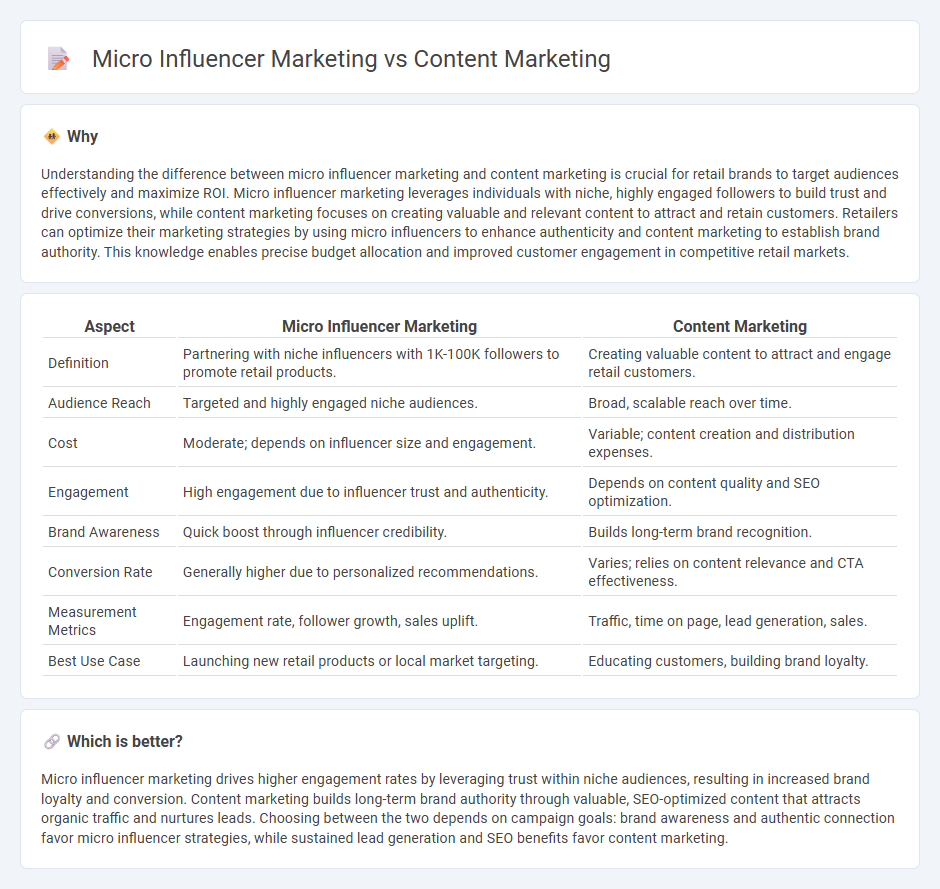
Micro influencer marketing leverages niche influencers with highly engaged audiences to drive authentic brand interactions and targeted customer reach in retail. Content marketing involves creating valuable, consistent content to attract and retain shoppers, enhancing brand visibility and loyalty over time. Explore the unique benefits of each strategy to optimize your retail marketing efforts.
Why it is important
Understanding the difference between micro influencer marketing and content marketing is crucial for retail brands to target audiences effectively and maximize ROI. Micro influencer marketing leverages individuals with niche, highly engaged followers to build trust and drive conversions, while content marketing focuses on creating valuable and relevant content to attract and retain customers. Retailers can optimize their marketing strategies by using micro influencers to enhance authenticity and content marketing to establish brand authority. This knowledge enables precise budget allocation and improved customer engagement in competitive retail markets.
Comparison Table
| Aspect | Micro Influencer Marketing | Content Marketing |
|---|---|---|
| Definition | Partnering with niche influencers with 1K-100K followers to promote retail products. | Creating valuable content to attract and engage retail customers. |
| Audience Reach | Targeted and highly engaged niche audiences. | Broad, scalable reach over time. |
| Cost | Moderate; depends on influencer size and engagement. | Variable; content creation and distribution expenses. |
| Engagement | High engagement due to influencer trust and authenticity. | Depends on content quality and SEO optimization. |
| Brand Awareness | Quick boost through influencer credibility. | Builds long-term brand recognition. |
| Conversion Rate | Generally higher due to personalized recommendations. | Varies; relies on content relevance and CTA effectiveness. |
| Measurement Metrics | Engagement rate, follower growth, sales uplift. | Traffic, time on page, lead generation, sales. |
| Best Use Case | Launching new retail products or local market targeting. | Educating customers, building brand loyalty. |
Which is better?
Micro influencer marketing drives higher engagement rates by leveraging trust within niche audiences, resulting in increased brand loyalty and conversion. Content marketing builds long-term brand authority through valuable, SEO-optimized content that attracts organic traffic and nurtures leads. Choosing between the two depends on campaign goals: brand awareness and authentic connection favor micro influencer strategies, while sustained lead generation and SEO benefits favor content marketing.
Connection
Micro influencer marketing enhances retail strategies by leveraging authentic content that resonates deeply with niche audiences, driving higher engagement and brand trust. Content marketing amplifies these efforts by providing valuable, tailored narratives that showcase products through relatable micro influencer experiences. This synergy increases conversion rates and strengthens customer loyalty in the competitive retail landscape.
Key Terms
Content Marketing:
Content marketing leverages strategic creation and distribution of valuable, relevant content to attract and engage target audiences, boosting brand awareness and customer loyalty. It includes diverse formats such as blogs, videos, infographics, and ebooks tailored to specific buyer personas and SEO strategies. Explore more about optimizing content marketing to maximize your brand's digital presence and conversion rates.
Brand storytelling
Brand storytelling in content marketing involves crafting compelling narratives that communicate a brand's values and mission through blogs, videos, and social media posts, building long-term customer loyalty. Micro influencer marketing leverages niche influencers with highly engaged audiences to deliver authentic, relatable brand stories that foster trust and drive conversions. Explore the unique advantages of each strategy to determine the best fit for your brand's storytelling goals.
SEO optimization
Content marketing enhances SEO by producing high-quality, keyword-rich articles that improve organic search rankings and drive sustained website traffic. Micro influencer marketing boosts SEO indirectly through authentic backlinks, increased brand mentions, and heightened social media engagement that signals relevance to search engines. Explore the benefits of combining content marketing and micro influencer marketing strategies to maximize SEO performance.
Source and External Links
What is Content Marketing? A Beginners Guide - Content marketing is the strategic creation and distribution of valuable, relevant content designed to attract and engage your target audience, focusing on building trust and driving profitable customer actions through content creation, distribution, and engagement.
What Is Content Marketing? - Content marketing is a strategic marketing approach focused on creating and distributing valuable, relevant, and consistent content to attract and retain a clearly defined audience, helping prospects and customers solve issues rather than pitching products directly.
The Complete Content Marketing Guide For 2025 - Copyblogger - Content marketing is a form of inbound marketing that attracts users by providing useful or entertaining content, helping companies build relationships and trust which facilitates faster product sales and generates compounding returns.