 dowidth.com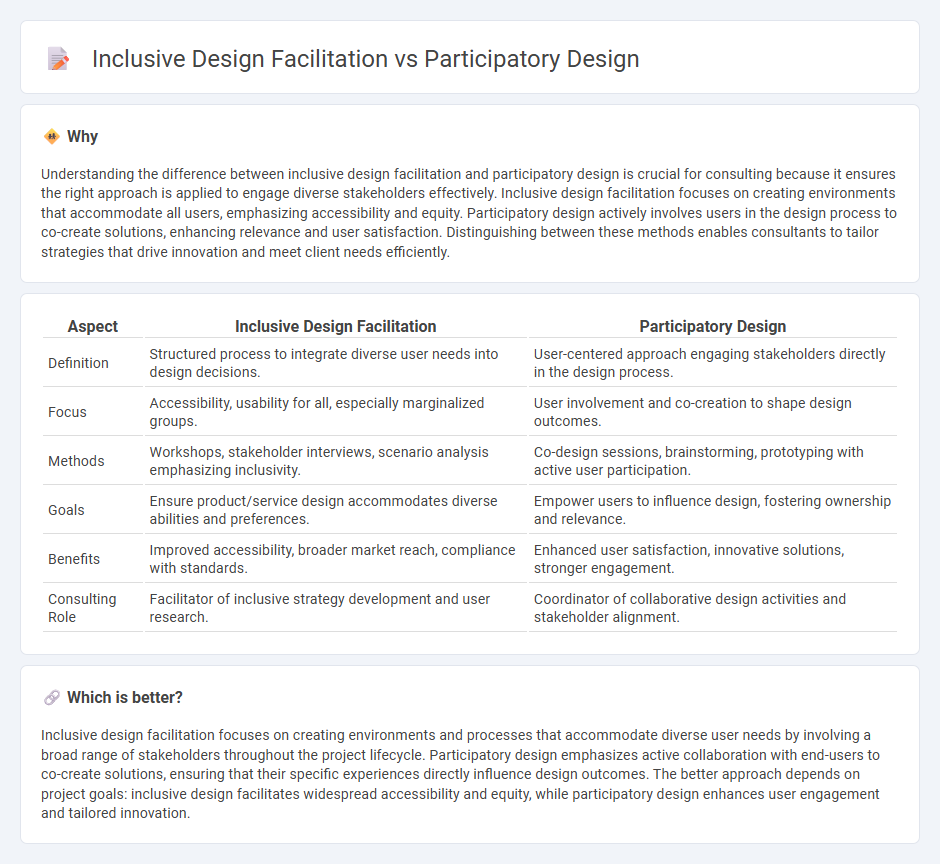
Inclusive design facilitation emphasizes creating environments where diverse user needs are anticipated and integrated throughout the design process, ensuring accessibility and equity for all stakeholders. Participatory design actively engages users as co-creators, fostering collaboration and shared decision-making to tailor solutions closely aligned with community insights. Explore deeper distinctions and applications of these approaches to optimize design strategies effectively.
Why it is important
Understanding the difference between inclusive design facilitation and participatory design is crucial for consulting because it ensures the right approach is applied to engage diverse stakeholders effectively. Inclusive design facilitation focuses on creating environments that accommodate all users, emphasizing accessibility and equity. Participatory design actively involves users in the design process to co-create solutions, enhancing relevance and user satisfaction. Distinguishing between these methods enables consultants to tailor strategies that drive innovation and meet client needs efficiently.
Comparison Table
| Aspect | Inclusive Design Facilitation | Participatory Design |
|---|---|---|
| Definition | Structured process to integrate diverse user needs into design decisions. | User-centered approach engaging stakeholders directly in the design process. |
| Focus | Accessibility, usability for all, especially marginalized groups. | User involvement and co-creation to shape design outcomes. |
| Methods | Workshops, stakeholder interviews, scenario analysis emphasizing inclusivity. | Co-design sessions, brainstorming, prototyping with active user participation. |
| Goals | Ensure product/service design accommodates diverse abilities and preferences. | Empower users to influence design, fostering ownership and relevance. |
| Benefits | Improved accessibility, broader market reach, compliance with standards. | Enhanced user satisfaction, innovative solutions, stronger engagement. |
| Consulting Role | Facilitator of inclusive strategy development and user research. | Coordinator of collaborative design activities and stakeholder alignment. |
Which is better?
Inclusive design facilitation focuses on creating environments and processes that accommodate diverse user needs by involving a broad range of stakeholders throughout the project lifecycle. Participatory design emphasizes active collaboration with end-users to co-create solutions, ensuring that their specific experiences directly influence design outcomes. The better approach depends on project goals: inclusive design facilitates widespread accessibility and equity, while participatory design enhances user engagement and tailored innovation.
Connection
Inclusive design facilitation and participatory design are interconnected through their shared focus on actively involving diverse user groups in the design process to ensure accessibility and usability for all. Inclusive design facilitation creates structured environments that empower marginalized voices, while participatory design integrates these voices directly into decision-making and prototyping phases. This synergy enhances product relevance, reduces bias, and drives innovation by reflecting authentic user needs.
Key Terms
Co-creation
Participatory design emphasizes active involvement of users in the design process to ensure the product meets their needs, while inclusive design facilitation aims to create environments where diverse participants can contribute effectively. Both approaches prioritize co-creation, leveraging collective insights to enhance usability and accessibility. Explore the nuances of these methodologies to better integrate user-centered collaboration in your projects.
Accessibility
Participatory design emphasizes active involvement of diverse users, ensuring solutions reflect real-world accessibility needs by integrating user feedback throughout the development process. Inclusive design facilitation prioritizes creating environments and processes that accommodate a wide spectrum of abilities, aiming for universal usability and minimizing barriers from the outset. Explore how combining participatory and inclusive design strategies enhances accessibility outcomes across projects.
Stakeholder engagement
Participatory design emphasizes active collaboration with all stakeholders throughout the design process, ensuring diverse voices shape outcomes. Inclusive design facilitation prioritizes accessibility and usability for a wide range of users, integrating stakeholder input to address specific needs and barriers. Explore detailed comparisons to enhance stakeholder engagement strategies in your projects.
Source and External Links
What is participatory design? | IxDF - Participatory design is a collaborative approach involving end-users actively throughout the design process to co-create solutions that meet their needs, emphasizing co-creation, inclusivity, empathy, iteration, transparency, and flexibility.
Co-Creating a More Equitable World: The Transformative Benefits of Participatory Design - D-Lab - Participatory design includes three types: design for the user, design with the user, and design by the user, promoting skill building, confidence, and equitable solution creation through user involvement.
Participatory Design in Practice | UX Magazine - Participatory design is a strategic approach that integrates customers deeply into the design process, fostering innovation and customer-centered solutions by designing with users rather than for them.