 dowidth.com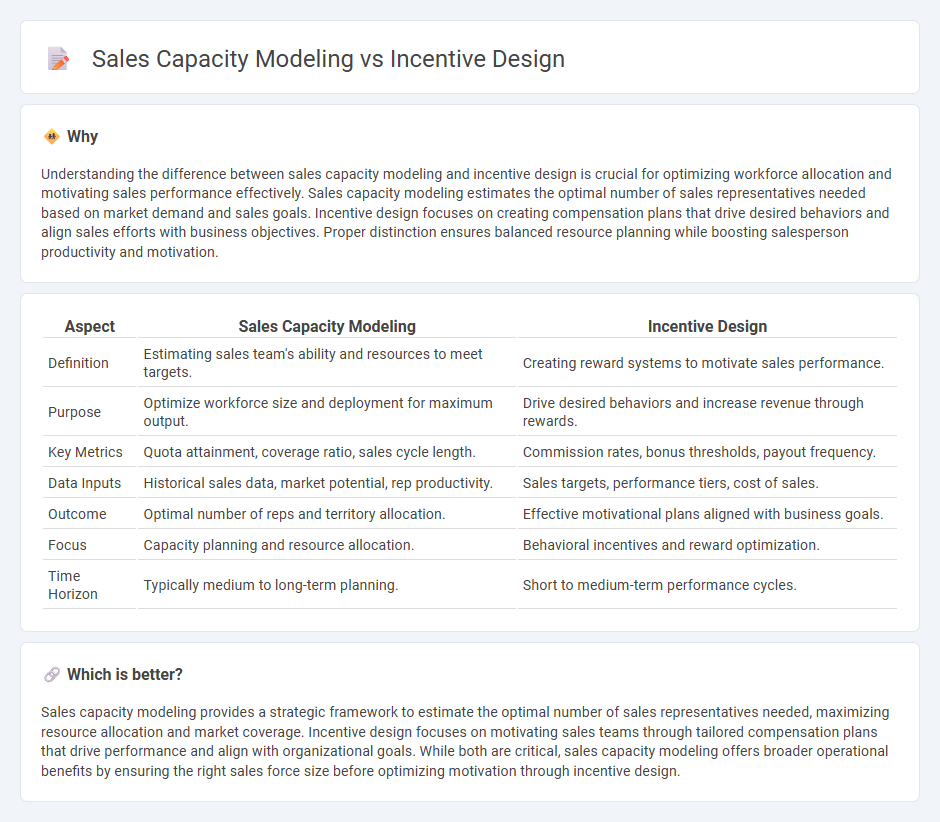
Sales capacity modeling determines the optimal number of sales representatives needed to achieve revenue targets by analyzing market potential, historical performance, and sales cycle length. Incentive design focuses on creating compensation plans that motivate sales teams, balancing fixed salary with variable rewards tied to individual and team performance metrics. Explore how integrating sales capacity modeling with incentive design can elevate your sales strategy and maximize revenue growth.
Why it is important
Understanding the difference between sales capacity modeling and incentive design is crucial for optimizing workforce allocation and motivating sales performance effectively. Sales capacity modeling estimates the optimal number of sales representatives needed based on market demand and sales goals. Incentive design focuses on creating compensation plans that drive desired behaviors and align sales efforts with business objectives. Proper distinction ensures balanced resource planning while boosting salesperson productivity and motivation.
Comparison Table
| Aspect | Sales Capacity Modeling | Incentive Design |
|---|---|---|
| Definition | Estimating sales team's ability and resources to meet targets. | Creating reward systems to motivate sales performance. |
| Purpose | Optimize workforce size and deployment for maximum output. | Drive desired behaviors and increase revenue through rewards. |
| Key Metrics | Quota attainment, coverage ratio, sales cycle length. | Commission rates, bonus thresholds, payout frequency. |
| Data Inputs | Historical sales data, market potential, rep productivity. | Sales targets, performance tiers, cost of sales. |
| Outcome | Optimal number of reps and territory allocation. | Effective motivational plans aligned with business goals. |
| Focus | Capacity planning and resource allocation. | Behavioral incentives and reward optimization. |
| Time Horizon | Typically medium to long-term planning. | Short to medium-term performance cycles. |
Which is better?
Sales capacity modeling provides a strategic framework to estimate the optimal number of sales representatives needed, maximizing resource allocation and market coverage. Incentive design focuses on motivating sales teams through tailored compensation plans that drive performance and align with organizational goals. While both are critical, sales capacity modeling offers broader operational benefits by ensuring the right sales force size before optimizing motivation through incentive design.
Connection
Sales capacity modeling quantifies the optimal number of sales representatives needed to achieve revenue targets based on market potential and sales cycle length. Incentive design aligns compensation structures to motivate behaviors that maximize sales capacity utilization and drive desired outcomes. Integrating these approaches ensures efficient resource allocation and enhanced performance through targeted motivation strategies.
Key Terms
**Incentive Design:**
Incentive design strategically aligns compensation structures with sales goals to motivate higher performance and drive revenue growth. Effective incentive plans incorporate key performance indicators, target attainment thresholds, and reward mechanisms tailored to sales roles and market conditions. Explore how optimized incentive design can transform sales outcomes and enhance motivation.
Commission Structure
Commission structure serves as a pivotal element in incentive design, directly influencing sales motivation and behavior by aligning compensation with performance metrics. Sales capacity modeling evaluates the optimal number of sales representatives needed to meet revenue targets, factoring in commission schemes to predict financial outcomes and ensure profitability. Explore further insights on how finely tuned commission structures enhance both incentive effectiveness and sales capacity planning.
Performance Metrics
Incentive design centers on aligning compensation structures with key performance metrics such as quota attainment, deal size, and sales cycle length to motivate desired behaviors. Sales capacity modeling evaluates workforce potential and resource allocation by analyzing productivity metrics like call volumes, conversion rates, and time-to-close to optimize sales team effectiveness. Explore how integrating both approaches can drive superior sales results and enhance organizational growth.
Source and External Links
The 6 Principles of Incentive Design | The Curiosity Chronicle - Incentive design should consider six key principles including Objectives, Metrics, Anti-Metrics, Stakes & Effects, Skin in the Game, and Clarity & Fluidity to create thoughtful and effective incentives aligned with deep business goals.
Ultimate Guide to Incentive Design - Made to Measure KPIs - Effective incentive plans use tiered targets and distinct prizes tailored for different performance levels to motivate top performers, average contributors, and laggards alike, ensuring engagement across the entire team.
5 Best Practices to Designing Your Incentive Program - Successful incentive program design requires thorough discovery and clear, simple structures focused on defined objectives, careful planning, and research to maintain participant motivation and maximize performance impact.